Editors’ Note
In the fall of 2022, as protests instigated by the killing of a young woman for the crime of improper hijab engulfed Iran, we asked one woman to keep a record of the events — the tempo and texture of the uprising, her own hopes and fears. That movement, dubbed “Woman, Life, Freedom,” captured the attention of the world. For a moment, it felt like the Islamic Republic of Iran might be on the precipice of historic change.
The euphoria was short-lived. Like earlier uprisings in 2019, 2009, and 1999, Woman, Life, Freedom was crushed by the government. Tens of thousands were arrested, and scores were executed for the sin of demanding a better life. Among many of our friends in Iran, a sort of low-level depression set in.
In the final days of 2025, protests erupted all over again, impelled by miserable economic conditions that have made even the most basic pursuits next to impossible. When the government cracked down some ten days later, it conducted its killing in the dark, shutting down cell towers and the internet, plunging this country of over 90 million into silence.
We asked the same diarist, a resident of Tehran, to walk us through her experience of these past weeks. We publish her words with the knowledge that this moment is ongoing, the story far from over. This text has been translated from Farsi.
In solidarity, Bidoun
I never thought they’d do it. It was as if someone pressed a big OFF button in the sky, and just like that the whole internet went down. It was around 10pm on Thursday, January 8, the eleventh day of the protests. The state news channels had been reporting that the internet was about to go “national” — that is, confined to Iran’s domestic intranet — and now it had. Suddenly, a country of 90 million people was cut off from the rest of the world.
The day had been eerily quiet. Driving home from my mother’s place in West Tehran, I’d gotten stuck in traffic around Fatemi Street. People there were walking around, full of cheer, chanting “Death to the dictator.” They gathered around the cars, urging drivers to honk and chant, too. I was surprised by how young they looked. Some of them wore visored caps that hid much of their faces — a precaution. Yet there were no security forces in the streets. No tear gas either.
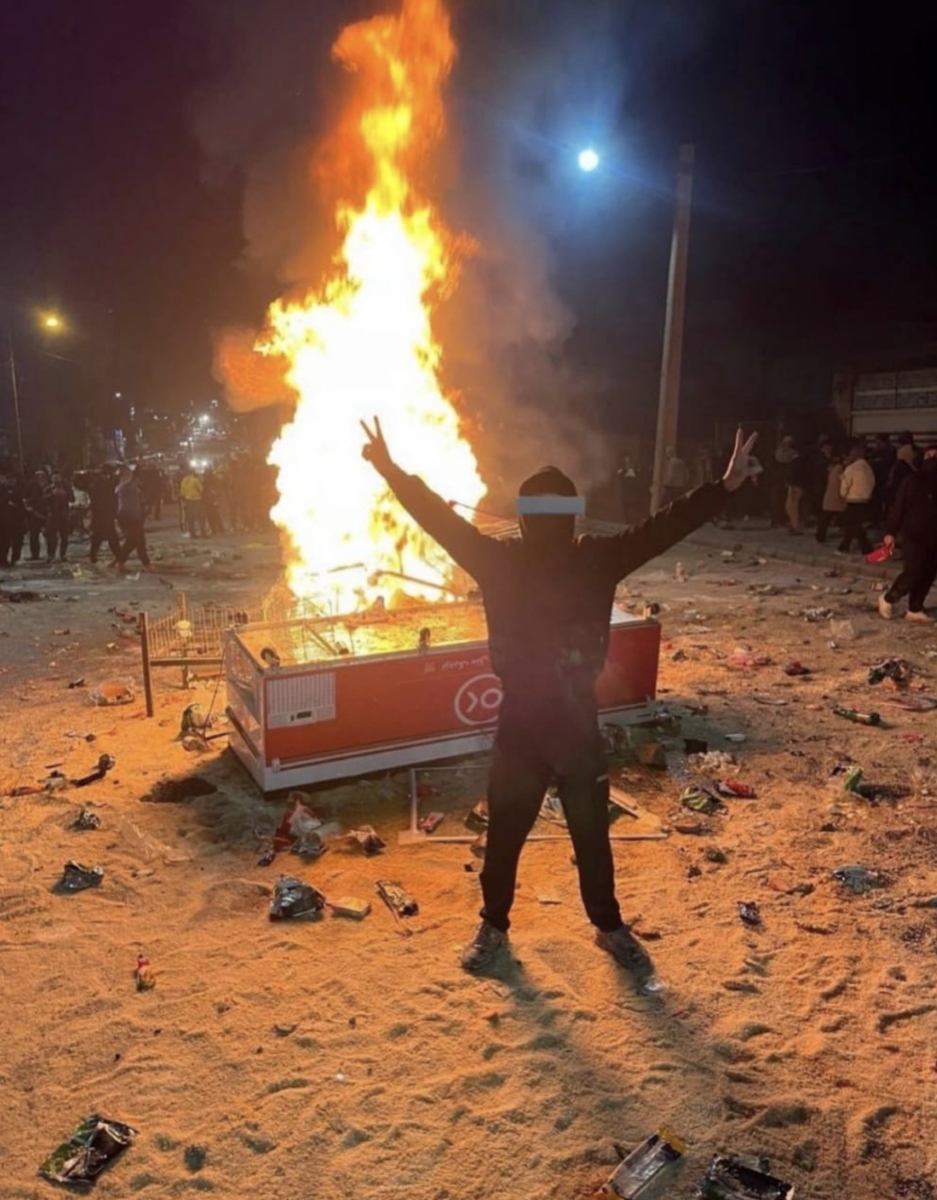
The city was in the hands of the protesters.
Suddenly, one boy, he was masked and dressed in black, dragged a burning trash bin right in front of me. We locked eyes. I was anxious because the economy is shit and if something were to happen to my car, I might not be able to afford the repairs. I said nothing and watched the flames dance until he eventually moved.
I kept going, sometimes driving the wrong way down one-way streets, eventually arriving at Valiasr Street, the biggest thoroughfare in the city. All the trash bins there were either burning or burned out. But even on Valiasr, there was no sign of authority — no security officers, let alone the motorcycle squads that usually roam around during protests, shouting “Haydar, Haydar”1 to spread fear.
In my mother’s neighborhood, residents had rained slogans down from their windows — mostly “Death to the dictator” but also “Long live the Shah” and “This is the final battle, Pahlavi will return.” They were speaking of Reza Pahlavi, the crown prince of the deposed Pahlavi dynasty, who had positioned himself as an opposition figure from his exile in the US. I couldn’t help myself and shouted, “Death to the oppressor, whether Shah or Leader.”2
Pahlavi had called for the protests that day and for that reason I had no intention of joining them. It didn’t sit right with me to do the bidding of the son of a former dictator when three years earlier, during the Woman, Life, Freedom movement, we’d fought to reject all forms of dictatorship.
But things were different now. I understood that the economic situation had worsened considerably since then. We’d hit rock bottom. People had lost all hope in local solutions.
The most mysterious aspect of this moment was the widespread sense that liberation was at hand. People were walking around saying, “This is it. This time they will fall.” Revolution felt very near in people’s minds. I wondered where this certitude came from. I wondered if what happened in Venezuela the previous week had convinced people that the regime could be toppled without bloodshed or full-scale war.
The protests had begun on December 28 in the Tehran bazaar. The value of the rial had plummeted, inflation was soaring, and the price of living had become impossible. To give you an idea of the scale of the problem, the cost of cigarettes had almost doubled in one month alone. Shopkeepers closed their stores and marched. The new reformist government seemed inclined to appease the protesters: during that first week, they didn’t act very harshly at all.3 They said that they’d heard the voice of the people, although their proposed solutions — including a plan to give every Iranian a monthly stipend of one million tomans (the equivalent of 7 US dollars) — were widely mocked.
Satellite TV, manned by Iranian exiles, was suggesting that the entire country was in open revolt, but the truth was that the protests were limited, even in Tehran. Crowds gathered in the bazaar during the day and a couple of neighborhoods at night. There were reports of unrest in Ilam and a few other nearby towns, but in most parts of the city, if you weren’t watching satellite TV or following the news from abroad, you wouldn’t know anything was happening at all.
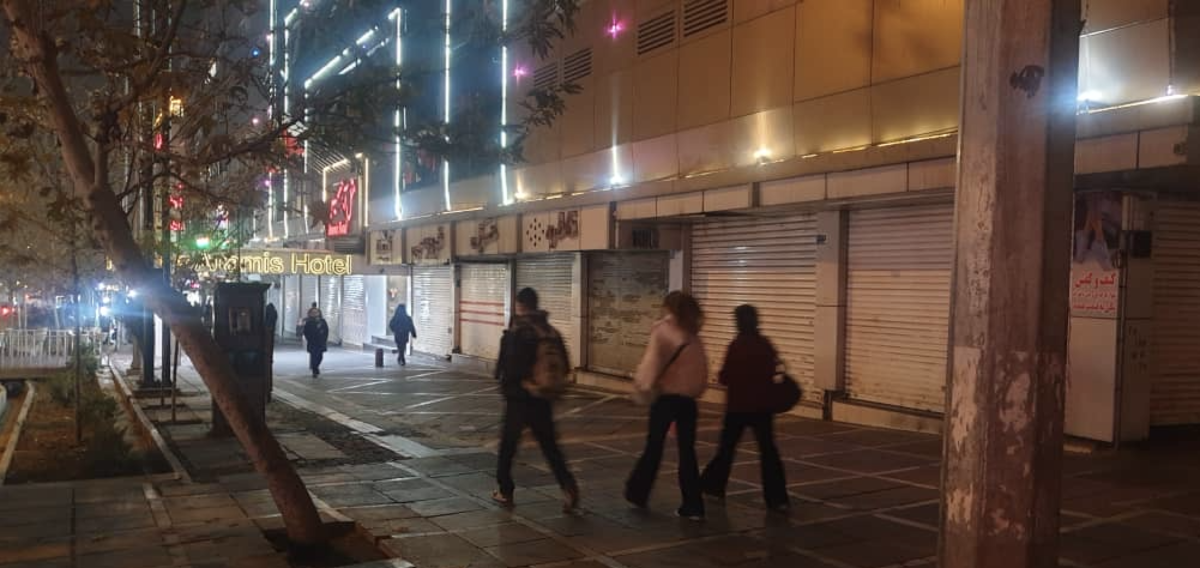
I headed out on the night of Wednesday, January 7, and couldn’t help but notice that Valiasr Street — its normally busy shops, restaurants, street cafes, and vendors — was virtually empty. Others were joining the strike. At the gym, everyone was talking about how freedom was around the corner.
The next evening, as I drove through an obstacle course of burning trash bins, I wondered whether these demonstrations would mirror Woman, Life, Freedom: a wave of protests and heroic sacrifices, dragging on for months, followed by repression. That movement had changed my life. No one dares ask a woman to wear hijab anymore, though many, no doubt, still want to. I honor those protests every day when I go out into the world unveiled. They gave me the confidence to walk in the streets, to feel that I belong there. I wondered what we might gain from this new uprising. I suppose I had no concept of the darkness ahead.
When I got home, the internet was still working. I watched the first videos streaming in from earlier that day. The flood of people in the streets shocked me. It felt much larger than three years ago. I hadn’t seen a crowd like that since the protests over the stolen presidential election in 2009. Footage also showed people chanting slogans in support of the Shah’s son in Ekbatan, a large public housing complex in western Tehran.
Then the internet cut out.
We thought it would last for a day or two at most. Everyone scrambled for VPNs, the kind that we’d used last summer during the Twelve-Day War with Israel. Soon we realized that SMS was down, too. In some places, our phones didn’t work at all. Internet connection was impossible for everyone except the privileged few with access to Starlink. There were rumors of police ransacking homes, looking for Starlink satellite dishes.
On Friday night, I went to a friend’s house to watch his satellite TV. Most of the talk from abroad was about Donald Trump’s tweets — his announcement that he would have our backs if the Iranian government made good on its threat to execute anyone caught protesting. But the news on our domestic television channel was terrifying. The state was now referring to protestors as “armed terrorists,” who they claimed had attacked people the night before — burning public property, killing untold numbers.
Over the next days, my daily routine involved opening domestic news agency sites whose full URLs you had to know by heart. I managed to open seven or eight sites. Three or four had no news of protests at all. The rest were cutting and pasting content from one another and once again going on about the terrorists responsible for the unrest. A friend sent me a site on Iran’s intranet where you could download foreign movies without censorship. That saved me: I watched Killers of the Flower Moon, The Last Viking, Nuremberg, and Apocalypse Now, twice. My brother, meanwhile, was losing his mind, unable to connect to his precious video games.
On Saturday morning, I became truly fearful. In previous protests, I’d always been one step removed; I hadn’t known a single person, directly or indirectly, who had been killed. Now everyone seemed to have a dead loved one.
A coworker told me that he had been protesting in Valiasr Square on Thursday and had continued to do so every night in different parts of the city. He showed me a text message from the police that read something like: You have been identified in the riots, so stay away from these places. I told him that I was at Valiasr Square on Thursday, too. Apparently, I’d gotten out before things got ugly. He said that at around 9:30pm, security forces had pushed the protesters back from Valiasr and Haft-e Tir Square, trapping them at Sanai Street in Karimkhan. Then they started shooting down at them from atop the 13 Aban Pharmacy.
What followed could only be described as a time of terror.
A friend from east Tehran said there had been clashes in the neighborhood of Tehranpars Friday morning: some sixty people died. Another friend said the Farabi Eye Hospital had admitted 1,500 since Thursday, many with pellet shots to the eyes. My brother spoke of a coworker’s husband who was shot and killed on Resalat Street. A friend’s elderly relative was stabbed on his way to the bank. Another friend who lives on Navab Street said that he had to scrub blood off the asphalt in front of his house. The local grocer spoke of a young man who was shot in the head beside him; someone else mentioned Salsabil, a busy commercial street where people had burned the local banks and destroyed motorcycles belonging to security forces. A young woman in my own neighborhood was shot in the throat. At the doctor’s office, a receptionist mentioned an eight-year-old girl shot and killed in her mother’s arms.
These stories were everywhere. But you couldn’t find them in the state media.
The biggest horror arrived a few days later, when videos taken at the Kahrizak Forensic Medical Center began to be released. At first, domestic news agencies released clips of corpses in black body bags and blamed “the terrorists” for the deaths. Eventually the Persian-language satellite channels released more footage. The scale of the carnage was almost unimaginable.
Before I saw the videos for myself, a friend had described opening thousands of body bags at Kahrizak when searching for a friend. At the time, I was sure he was exaggerating. Then the videos came out of body after body, side by side, or sometimes piled into heaps. Black bags, smeared with blood, contained bullet-shattered heads, torn stomachs, pulverized brains.
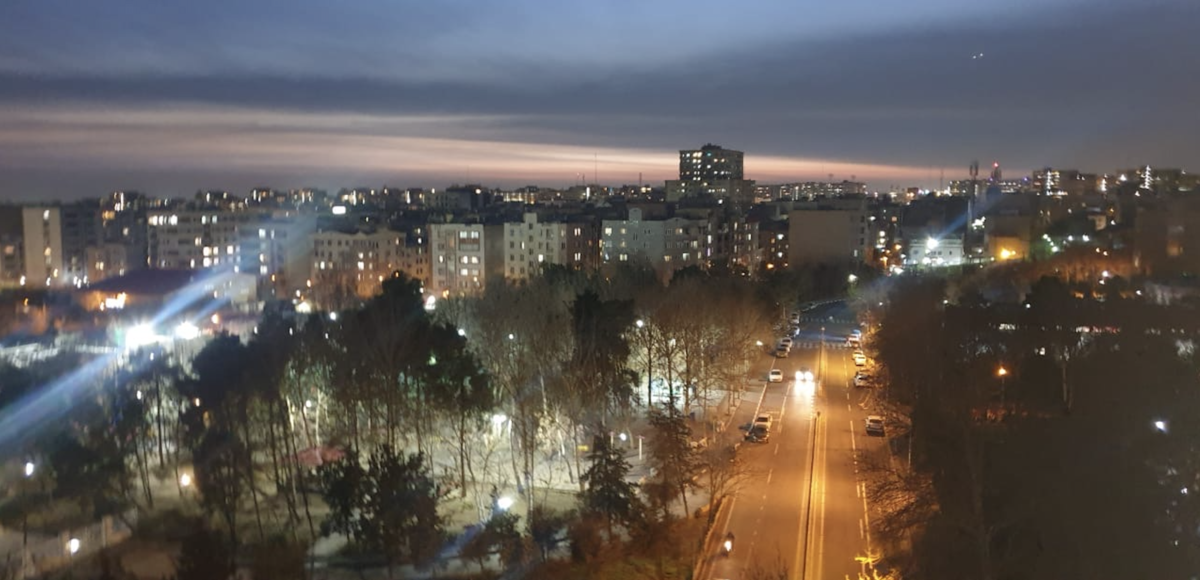
On Saturday, as the work week began, the Shah’s son continued to call for protests through Iran International, the Saudi-backed satellite channel that serves as the propaganda platform for the monarchists. People abandoned their jobs every afternoon, rushing home to escape the violence awaiting them in the streets. By 5pm, a pall seemed to settle over the city. Everything went dark. For a day or two, you would still hear anti-regime chants from the windows — proof that something was still happening. But by Monday, the chanting stopped.
The city was dead after that. Without internet, many people couldn’t work. The only communication were the SMS messages we received from the Leader, the police, and the intelligence agencies, addressed to the “Noble People of Iran” and chronicling the crimes of the “Zionist-American terror networks.”
On January 22, the internet flickered to life. Telegram started working for some of us. Although only a small percentage of people managed to connect, videos flooded the internet. I spent the next day at home, watching all of them. On Instagram, people posted footage of the funerals of young people, their families crying, ululating, chanting at their children’s graves. I watched each one, as if it were my sacred duty to attend these funerals, too.
There were videos of families searching Kahrizak for their loved ones. Most painful of all was the footage of a father looking for his son, calling out his name over and over again — Sepehr — making his way through the sea of corpses. More bullet-ridden bodies. More clips of wounded people, fleeing, bleeding. Security forces wielding Kalashnikovs and machetes.
Today is Saturday. I am barely able to connect to the internet. There are no new videos. Most people can’t connect at all. My contact list on Telegram is suspended in time, the majority of them last online on January 8. Of course many Iranians will never connect again.
Since last night, everyone has been talking about the possibility of war with the US. The idea of war used to be frightening. It certainly was last summer, during the Twelve-Day War, but now I’m numb to it. I used to tell myself that things can always get worse, but I cannot imagine anything worse than this.
When Iranians took to the streets in November 2019, and the government cracked down, they said 1,500 had been killed. That number sounded unbelievable. Now, given everything I’ve seen and heard, imagining twenty thousand killed over a long weekend does not feel absurd.
How do we remember the dead? How do we ensure their lives were not lost in vain?
I’m tired of political analyses and factional score-keeping — of monarchists who read these deaths as their victory, of opposition members who blame one another instead of the perpetrators, and of regime supporters drunk on “triumph.” I can’t sleep thinking about the wave of executions that is surely ahead.
There is nothing left but to mourn those who had nothing left to lose but their lives.
I have no hope now for my country’s future — for freedom, democracy, prosperity. What lies ahead is war, suffocating despotism, poverty and ruin.
I want to believe that even in the darkest moments of human history there is always a glimmer of hope. But I think sometimes one must allow oneself time to see and hear nothing but despair. Nothing but mourning. Maybe this hopelessness will be useful tomorrow. Or maybe there will be no tomorrow.
I’m tired of this cycle of protest and massacre. I’m tired of the dream of freedom that was sold to us at such a high price. The constant loss of young lives has turned living in this country into a source of shame. I’m tired of being alive for this dream.
Translation note: The English version of this text has been adjusted slightly in the editing process and in collaboration with the author.
1. Haydar (“lion”) is the epithet the militias use to refer to Imam Ali, emphasizing his militant character
2. Some of these chants went as follows: Marg bar diktator, Javid shah, In Akharin nabarde — Pahlavi barmigarde, Marg bar setamgar — che shah bashe che rahbar.
3. The uprising was the first test of the presidency of Masoud Pezeshkian, a surgeon and lawmaker who was elected in 2024. He’d campaigned on a platform that emphasized reducing tensions with the west and minimizing the role of the morality police in Iranian society.